Monday, November 5, 2012

Leaders

Mexico:
Leader: Enrique Pena Nieto

  • has not yet taken his role as president but will be taking office in December
  • he was governor of Mexico for six years before running for president 
  • people cheat on ballots when voting for him, people's lives are threatened unless they vote for him


China
Leader: Hu Jintao

  • became a local leader of the Young Communist Youth League, in 1982 he turned thirty nine and became the youngest member of the central committee
  • he was made vice president at the age of fifty six in 1998- he was the youngest person in modern history to have this job- after, he was made vice chairman of china's state central military commission.
  • head of the entire communist party of China
  • they don't vote-hu jintao is not going to be president anymore 


India
Leader: President Pranab Mukherjee

  • President of the unit of congress since 1985 but resigned in July, 2010
  • 1969 was when he got a break to be in politics from prime minister Indira Gandhi - he helped Pranab get elected into the upper house in India's parliament.

Afghanistan
leader: Hamid Karzai

  • Chosen for a two year term as Interim president during the 2002 grand assembly
  • In 2004 he was elected president and he won a second five year term in 2009
  • before he ran this country the Taliban ran it 

Iran:
Leader: Mahmud

  • He was an engineer and a teacher from a very poor background, he joined the office for strengthening unity after the Islamic revolution.
  • when he ran for president, his campaign received 62% of the election runoff votes and he became president- this was in 2005, his second term ends on august third 2013

Israel:
Leader:   prime minister Binyamin netanyahu

  • He formed a coalition government 
  • The first Israeli prime minister born in Israel after the founding of the state


Germany:

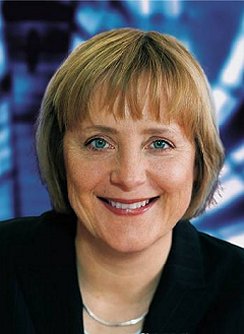
Leader: Angela Merkel

  • She is the First woman to become a chancellor of Germany
  • She is seen to play a very crucial role in managing the financial crisis (referred to as the decider) she also plays a major role in the problems that concern health care reform and future energy development 


United Kingdom:

Leader: David Cameron

  • He earned his first honors degree at oxford- philosophy, politics and economics
  • when he was little he got an amazing education
  • At age 43 he became the youngest British prime minister  since earl of Liverpool 198 years later
  • the queen speaks fluent french, she has a lot of awards, she has been in power for the longest time- she is just a figurehead 

France:
Leader: Francois Hollande
  • On the 16th of October he won the socialist and Radical left party nomination with more than 56% of the votes
  • On May sixth he defeated his opponent in the second runoff becoming the president of France


Brazil:
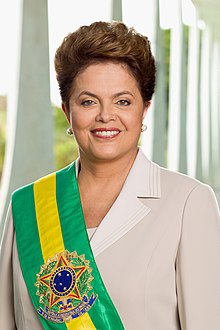
Leader: Dilma Rousseff 
  • First woman to hold office, she was also the first woman to become chief of staff to the president of Brazil
  • She was elected in a runoff on October 31, 2010- She is the first female elected president of Brazil, she is also the first economist to hold office

Venezuela:
Leader: President Hugo Chavez
  • he has held the position of president since 1999
  • He has focused on implementing socialist reforms in his country as a part of his project which is called Bolivarian Revolution 

 Saudi Arabia:
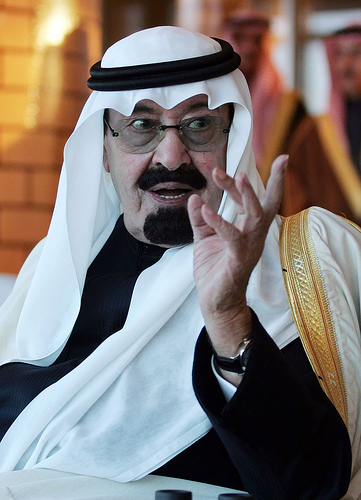
Leader: king and prime minister abdullah bin abdulaziz al saud
  • he became king on August 1, 2005 on account of his half brother king Fahd's death
  • he held important political positions during his life, one of them being that he was the mayor of Mecca as a young man, he is the sixth king of Saudi Arabia

Sunday, October 28, 2012

countries!


                Mexico:
       
                            Constitution: Federal republic            
       
                               Leader: Enrique pena nieto


China:

 Constitution: communist state
Leader: Hu Jintao


India:

Government:  federal republic
Leader: President Pranab Mukherjee

Afghanistan:
 Government: Islamic republic
Leader: Hamid Karzai
Description: http://cdn3.wn.com/pd/76/6a/4a0df36e7cabdd990ee7806f534a_grande.jpg


Iran:

Government: Theocratic republic
Leader: President Mahmud
Description: http://www.majalla.com/eng/wp-content/uploads/2012/07/146597605.jpg


Israel:

Government: Parliamentary Democracy
Leader: President Shimon Peres and prime minister binyamin netanyahu
Description: http://thinkprogress.org/wp-content/uploads/2012/03/shimon-peres.jpg


Description: http://thatsglitchy.com/wp-content/uploads/2012/03/1403223478-joachim-gauck-bundespraesident.9.jpg


Germany:

Government: Federal republic


Leader: Angela Mercle 


United Kingdom:
                                             Government: Constitutional Monarchy and commonwealth realm
                                              Leader: Queen Elizabeth II
                                                Description: http://www.eliteoftheworld.com/images/gallery/1306157961queen-elizabeth-ii-british-elite-1.jpg    


                                          France:
                                        Government: Republic
                                         Leader: President Francois Hollande
Description: http://thatsglitchy.com/wp-content/uploads/2012/03/1403223478-joachim-gauck-bundespraesident.9.jpg
                                          Description: http://upload.wikimedia.org/wikipedia/commons/thumb/0/07/Fran%C3%A7ois_Hollande_(Journ%C3%A9es_de_Nantes_2012).jpg/220px-Fran%C3%A7ois_Hollande_(Journ%C3%A9es_de_Nantes_2012).jpg
Brazil:
Government: Federal republic
Leader: President Dilma Rousseff
 Description: http://www.portalhoje.com/wp-content/uploads/2011/01/dilmaoficial410x600.jpg


Venezuela:
Government: Federal republic
Leader: President Hugo Chavez
Description: http://venezuela-us.org/live/wp-content/uploads/2009/08/prensapresidencial_p_mg3193jpg.jpg
Saudi Arabia:
Government: Monarchy
Leader: king and prime minister abdullah bin abdulaziz al saud

Wednesday, October 24, 2012

a do homework day!


Today in human geography we didn’t have a lot of time to do a lot of work so we just did some other homework in the short time that we had. We pretty much had a free class to get other work done!

Tuesday, October 23, 2012

review for the test


Today in human geography we discussed making up questions for our test that is this Friday.  We mostly reviewed what we had learned which was the religions and the Vikings, Native Americans, and Columbus. We talked about Siddhartha and how he fasted, Saul and his transformation, different gods and if the religions were monotheistic or polytheistic. Also the Geographical distribution and percentage of these religions throughout the world, for example: a lot of people that live in India practice Hinduism; about 80% of India is made up of this religion, and Christianity can be found in most parts of Europe and around that area. There are also some people who haven’t chosen to practice a religion, about one billion people in the world do not practice any type of religion. We also said that there should be a question on the test concerning Muhammad and where he was born, which was mecca. So today all we pretty much did was review and watch Doori laugh herself to death!

Saturday, October 20, 2012

Hinduism and Judaism


In our last class of human geography we covered the last few religions: Hinduism and Judaism. First we talked about Hinduism and how it does not claim any one prophet, it’s a way of life and a way of living. The sacred text is called Vedas and Bhagaud, and sometimes the people of this religion go to services. About 80% of India is made up of Hindus, there are different sects of this religion and there are over 1 billion Hindus in the world. Next we talked about Judaism, this religion is monotheistic. We discussed the story of Abraham and Isaac; the story goes that Abraham was going to sacrifice his own son Isaac in order to prove his faith in God, and he was going through with the plan until God stopped him. God said to Abraham that because of his unfailing faith Abraham would have as many descendants as there are stars. Abraham's descendants are known as the Jews and their holy book is the Talmud and the Torah, also a few other books included in the Old Testament. There are 13.5 million Jews, 42% live in Israel another 42% live in the U.S. and Canada, and the rest are spread out over Europe. The Abraham God is their central figure; the same central figure as the Christians and the Muslims. 

Tuesday, October 16, 2012

Islam and Buddhism!


Today we talked more about religions. First we talked about Islam and how their central figure is Muhammad (570-632) he was known for supposedly speaking to God. His revelations from God were written in their religion’s holy book which is called the Qur’an. We learned that this religion is monotheistic and that there are about 1.6 – 1.7 Muslims in the world, also most of these Muslims are found in the Middle East like Indonesia, Pakistan, and Bangladesh. Muhammad was born in Mecca and the Muslims think that this is a very holy place, also Medina is another very sacred place where the Muslims are expected to go to before they die. We talked a little about how different the people of this religion dress than us, their women are dressed very modestly and we do not dress so modest, the Muslims were getting angry with us because our culture was starting to slowly weasel its way into theirs. After Muhammad died two groups were formed and they turned against each other, their names were the Shiites and the Sunnis. Then we talked about Buddhism, their central figure is Siddhartha Gautama (   563-483 BC). He was either going to be a king or he was to be a spiritual leader. His father of course wanted him to be a king instead of a spiritual leader so he kept him away from religion, until Siddhartha ran away only to discover that the world was so much different than the life his father gave him, there was suffering and war.  He sought to end all suffering. This religion does not have a holy book, but it does have what they call the 4 noble truths and they are: 1.- everyone experiences suffering, 2. The origin of suffering is the craving for acquisition of identity, 3. Suffering can be ended, and 4. The way to end suffering is the eight fold path. They believe in reincarnation, and if you were a good person on earth you would come back as a higher life form, but if you were a bad person you would come back as a lower life form until you were good and worked your way up to being a higher life form. Buddhism has 376 million followers in the world. 

Monday, October 15, 2012

religion and Paul


In today’s human geo class we talked about more ethnic heritage. We talked about how in the countries of Rwanda and Burundi in Africa, and how there are two dominant ethnic groups; the Tutsis and the Hutus. The Hutus were always more dominant over the Tutsis and persecuted them, but in some areas that is different and the Tutsis are dominant and they are the ones who persecute the Hutus.  Next we talked about how the U.S. had merged multiple ethnic groups in their countries with no problem. Korea and Japan mostly just go by one ethnic group because they want to retain their ethnicity. After that we started talking about religion and how there are five major religions in the world today and they are: Hinduism, Buddhism, Judaism, Christianity, and Islam. We went over our homework that discussed these five religions, but then we got to talking about how Christianity got started. Christianity used to be a criminal offence and people were persecuted for it. There was a man named Saul and he loved persecuting the Christians because he was very good at it, but one day while on his way to Damascus there was a beam of light that blinded him and he heard God’s voice telling him not to persecute the Christians anymore. After his encounter with God, Saul changed his ways; he was from then on known as Paul and he went out to all these different places and preached to all these people. If people wrote him letters, he would write back to them, those places built churches and from then on they fully understood God. When Jesus was alive he was not as widely famous as people thought, Jesus mainly preached in his own homeland and didn’t get to travel a lot. Towards the end of class we talked about Jesus knowing that he was starting a religion or if it was unintended. A few of us thought that it was unintentional and that Jesus was just trying to set us on the right path.